Pafos District Museum: objects that tell a longer history
A museum visit can turn the long history of Pafos into something tangible: a small figure, an everyday vessel, an inscription. Use this guide to choose questions to carry through the archaeological collections, rather than rush from one period label to the next.
A historical visitor guide based on the institutional sources linked below. Interpretation and practical reading notes by BEST.
The collection as a chronological journey
The Department of Antiquities describes a chronological display from the Epipalaeolithic to Roman times. Its museum opened in 1964 and later expanded; a further reorganisation formed part of the 2014–2020 European funding programme.
From early communities to overseas connections
The collection includes early material from Roudias and Myloudia. Chalcolithic displays feature cruciform figures and working of picrolite, alongside evidence of early copper use. Bronze Age sections connect pottery, craft and settlements with wider exchange. Palaipafos and Maa belong to this longer regional story; they are not simply alternative names for the later town of Nea Pafos.
Objects that make daily life visible
The official description highlights coins, weights, ceramics and tools as well as sculpture. Roman-period material includes medical instruments and ceramic therapeutic vessels. Wall paintings from the House of Aion and a theatre building inscription naming Antoninus Pius and Marcus Aurelius offer other entry points into public and domestic life.
A slower way to explore
Choose three objects: something used at home, something connected with exchange and something made for display. For each, read the label before deciding what it represents. Note the material, findspot and date separately; a findspot is not automatically the place where an object was made.
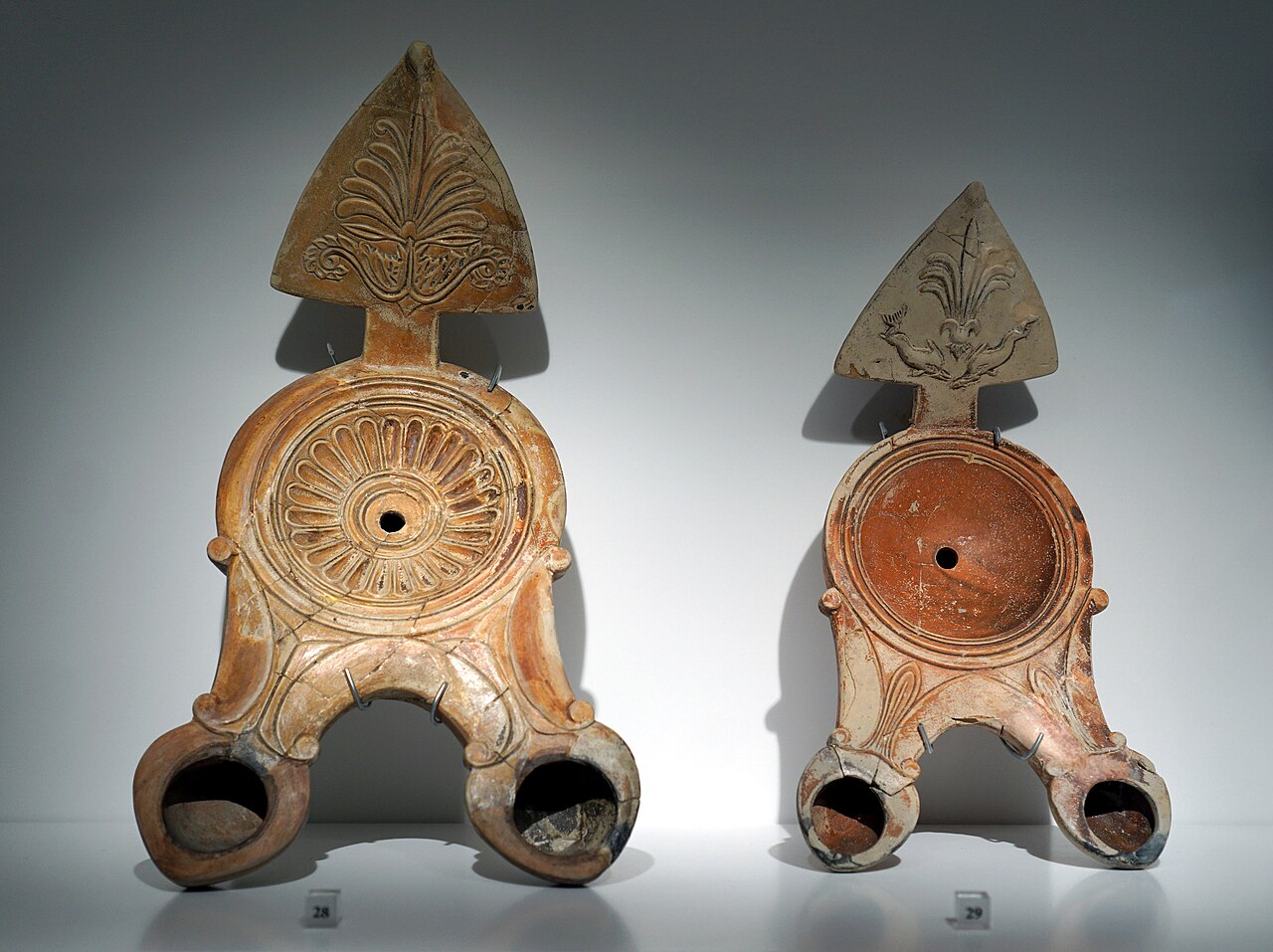
Ask what survives and what is missing. A lamp invites questions about light and household routines, but its presence alone does not tell us exactly how a particular family lived. A coin can carry an official image while also being an everyday means of payment. Let small objects raise questions instead of expecting every case to supply a complete reconstruction.
Connect the museum with the landscape
Before leaving, write down one place-name from a label that you want to understand better. Read the relevant site guide next, so that objects and excavated spaces inform each other. Keep the district museum, archaeological sites and individual houses distinct when recording where you saw something.
The photograph accompanying this article shows ancient oil lamps associated with Nea Pafos; it is contextual illustration, not a guarantee that those exact pieces are currently displayed in this museum. Displays and access arrangements can change. Consult the Department of Antiquities for current visitor information, and follow the labels and staff guidance during your visit.
Source and further reading
Source reviewed 15 October 2026. Institutional records and collections are distinguished from visitor interpretation.
Peoples, communities and working life · Explore local history · All articles